
Choosing between manual and electric hospital beds is an important decision for medical equipment distributors. Both types serve essential roles in healthcare facilities, but they differ in operation, cost, maintenance requirements, and target applications.
For importers and distributors, selecting the right product range is not simply about choosing the most advanced option. It is about understanding local market demand, customer budgets, service capabilities, and the long-term value each product can provide.
In this guide, we compare manual and electric hospital beds to help you make informed purchasing decisions and build a product portfolio that meets your customers’ needs.
1. What Is a Manual Hospital Bed?
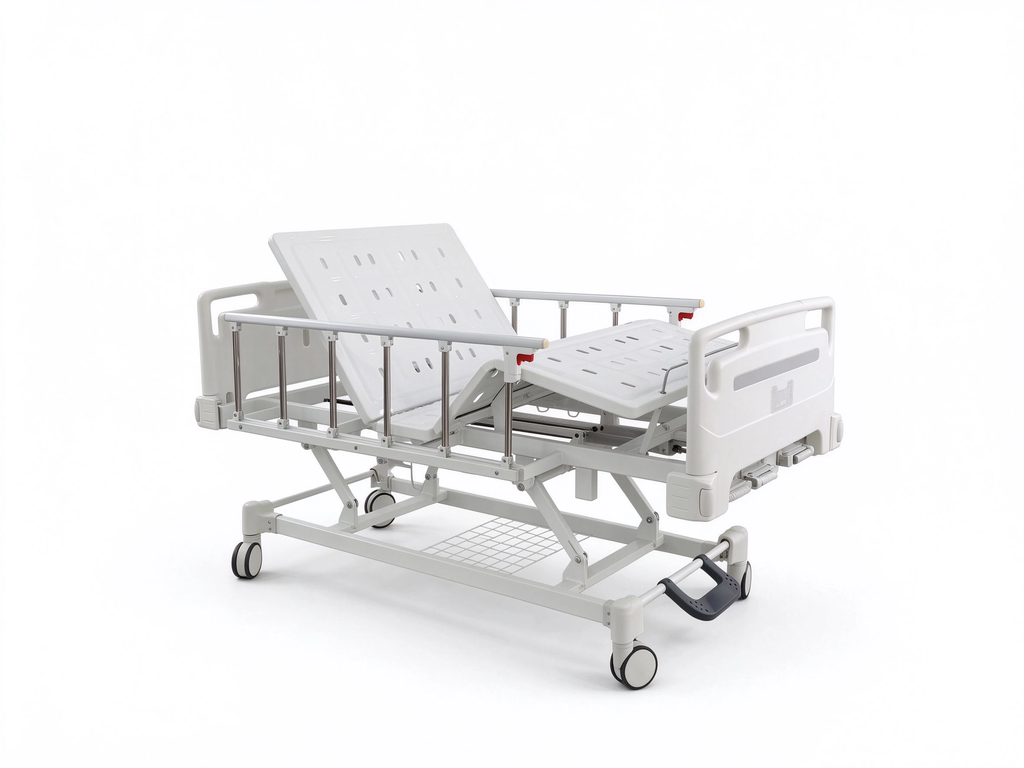
A manual hospital bed uses mechanical cranks to adjust selected sections of the bed. Depending on the model, these adjustments may include the backrest, knee section, or overall bed height.
Manual hospital beds are commonly considered for general hospital wards, clinics, and healthcare facilities that prefer mechanical adjustment systems.
Key Advantages of Manual Hospital Beds
Lower initial purchase cost
Manual beds may be suitable for projects with strict purchasing budgets. The final price depends on the bed configuration, materials, accessories, and order quantity.
Straightforward operation
Mechanical adjustment does not require an electric actuator or a powered control system for the functions operated by the crank.
No mains power required for mechanical adjustment
Manual adjustment functions can operate without electrical power, which may be useful in facilities with limited electrical infrastructure.
Mechanical maintenance
Maintenance focuses on the crank mechanism, moving parts, frame, casters, and other mechanical components.
What Should Distributors Check?
Before purchasing manual hospital beds, confirm the number of adjustment functions, crank accessibility, mechanical performance, frame construction, side-rail design, and availability of replacement parts.
A lower purchase price should not come at the expense of product quality or suitability for the intended application.
2. What Is an Electric Hospital Bed?
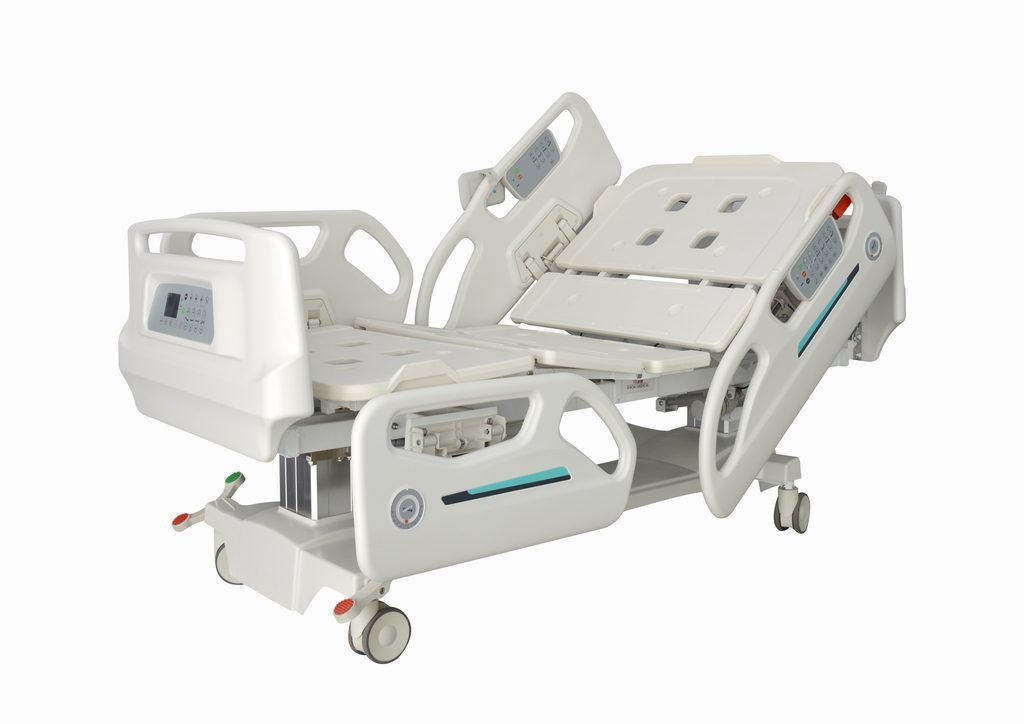
An electric hospital bed uses electric actuators and a control system to adjust selected bed positions.
Depending on the model, available functions may include backrest adjustment, knee-rest adjustment, and height adjustment. Some models provide additional positioning functions.
Key Advantages of Electric Hospital Beds
Convenient adjustment
Electric controls allow users to adjust supported bed positions without manually turning a crank.
Flexible configurations
Manufacturers may offer different combinations of adjustment functions to meet the requirements of different healthcare facilities.
Potential operational convenience
Electric adjustment may simplify positioning tasks for caregivers, depending on the bed design, clinical workflow, and intended use.
Additional product differentiation
For distributors, electric beds can provide opportunities to serve customers seeking more advanced features or differentiated product configurations.
What Should Distributors Check?
Review the actuator specifications, controller, electrical supply requirements, cable arrangement, adjustment functions, emergency operation features where applicable, and availability of replacement components.
Also verify relevant product safety documentation and confirm compatibility with the destination market’s electrical requirements.
3. Manual vs. Electric Hospital Beds: Key Differences
The following table provides a general comparison. Actual features and costs vary by model and configuration.
| Comparison | Manual Hospital Bed | Electric Hospital Bed |
| Adjustment | Mechanical crank | Electric actuator and controller |
| Initial purchase cost | Often lower | Often higher |
| Power requirement | Not required for mechanical adjustment | Required for powered adjustment |
| Operating convenience | Depends on crank design and functions | Convenient powered positioning |
| Maintenance focus | Mechanical components | Mechanical and electrical components |
| Spare parts | Cranks, casters, hardware, and other components | Motors, controllers, cables, and mechanical parts |
| Product positioning | Budget-conscious and basic applications | Customers seeking powered adjustment |
| Key purchasing concern | Mechanical quality and usability | Electrical compatibility, functions, and service support |
Neither type is automatically the better choice for every customer. The right option depends on the intended application and the requirements of the destination market.
4. Which Hospital Bed Is Better for Different Healthcare Facilities?
General Hospital Wards
Both manual and electric beds may be suitable for general wards.
The decision should consider the hospital’s purchasing budget, care procedures, staff requirements, expected service life, and available maintenance support.
Nursing Homes and Long-Term Care Facilities
Electric beds may offer convenient adjustment for selected care activities. However, the appropriate choice depends on the needs of residents, caregivers, facility policies, and the bed’s intended use.
Distributors should evaluate the required functions rather than assuming that every nursing facility needs the same configuration.
Clinics and Smaller Healthcare Facilities
Some clinics may prefer manual beds because of their straightforward mechanical operation and potentially lower purchase cost.
Other facilities may require electric adjustment depending on their services and patient-care procedures.
Government and Large Hospital Projects
For institutional procurement, compare the tender specifications, required quantities, documentation, delivery schedule, inspection requirements, and after-sales obligations.
A project may require both manual and electric models to meet different departmental needs.
5. How Much Does a Manual or Electric Hospital Bed Cost?
Hospital bed prices vary considerably. There is no single price that applies to every model or market.
The quotation may depend on:
- Bed dimensions and adjustment functions.
- Frame materials and surface treatment.
- Side rails, casters, and accessories.
- Motor and controller specifications for electric models.
- Packaging and shipping configuration.
- Order quantity and customization requirements.
- Required documentation and inspection arrangements.
For international distributors, the factory price is only one part of the purchasing decision.
Calculate the total landed cost, including freight, insurance where applicable, customs-related expenses, local transportation, warehousing, and other costs relevant to the agreed Incoterm and destination market.
To compare suppliers fairly, request quotations based on the same model specifications, accessories, order quantity, packaging requirements, and delivery terms.
6. What Should Distributors Look for in a Hospital Bed Manufacturer?
A reliable supplier should be able to provide clear product information and explain the differences between available models.
Product Specifications and Documentation
Request technical datasheets, user manuals, product identification information, and relevant test or conformity documents.
For electric beds, confirm which electrical safety and electromagnetic compatibility requirements apply to the specific product and destination market.
Do not assume that a certificate for one model automatically covers every product offered by the same supplier.
Manufacturing and Quality Control
Ask how the manufacturer manages incoming materials, production inspections, functional testing, final inspection, and product traceability.
Where practical, arrange a factory audit or sample evaluation before committing to a large order.
Spare Parts and After-Sales Support
Confirm the availability of replacement parts, written warranty terms, technical assistance, and the process for handling product defects.
For electric beds, clarify how replacement motors, controllers, and other electrical components can be sourced.
OEM and Customization Capabilities
If you sell under your own brand, ask whether the manufacturer can support agreed requirements for logos, labels, packaging, colors, and product configurations.
Confirm minimum order quantities, sample approval procedures, additional costs, lead times, and any regulatory implications before placing an OEM order.
7. How to Choose the Right Product Mix for Your Distribution Business
Instead of purchasing only one type of bed, consider developing a product portfolio based on your customers’ needs.
A practical approach may include:
- Entry-level range: Selected manual beds for customers prioritizing basic functions and budget.
- Mid-range options: Models with additional adjustment functions where supported by actual product configurations.
- Electric range: Powered beds for customers who value convenient positioning.
- Specialized products: Additional models only when there is clear demand and the necessary technical and regulatory support.
Start with a manageable number of models. This can make product training, inventory planning, spare-parts management, and after-sales support easier to organize.
Review customer feedback and sales data before expanding the range.
Frequently Asked Questions
Are manual hospital beds better than electric hospital beds?
Not necessarily. Manual beds may be suitable for budget-conscious applications, while electric beds provide powered adjustment. The best choice depends on the intended use, budget, required functions, and available maintenance support.
Do electric hospital beds require special maintenance?
Electric beds require appropriate inspection and maintenance of both mechanical and electrical components. Follow the manufacturer’s instructions and applicable requirements for the specific model.
Can distributors order hospital beds with their own brand?
OEM customization may be available depending on the manufacturer and product. Confirm logo options, packaging, minimum order quantity, documentation, and sample approval requirements before ordering.
What information is needed for a hospital bed quotation?
Provide the destination country, bed type, required functions, estimated quantity, accessories, customization requirements, documentation needs, and expected delivery schedule.
How can I compare hospital bed suppliers?
Compare complete specifications, relevant documentation, sample quality, manufacturing processes, packaging, delivery terms, warranty arrangements, and spare-parts support. Avoid making purchasing decisions based on unit price alone.
Conclusion
Manual and electric hospital beds serve different purchasing needs, and both can play an important role in a medical equipment distributor’s product portfolio.
Manual beds may appeal to customers prioritizing straightforward mechanical operation and initial cost. Electric beds may be more appropriate where powered adjustment and specific operational features are required.
The most effective approach is to understand your target market, compare complete specifications, evaluate the manufacturer, and calculate the total cost of supplying each product.
Looking for a Hospital Bed Supplier?
ZIBO CHENGCHUAN MEDICAL DEVICE CO., LTD welcomes inquiries from international medical equipment distributors, importers, and OEM partners.
Tell us about your target market, required bed configuration, estimated quantity, and customization needs. Our team can review your requirements and discuss suitable product options.
Contact us to request a quotation for manual or electric hospital beds.